

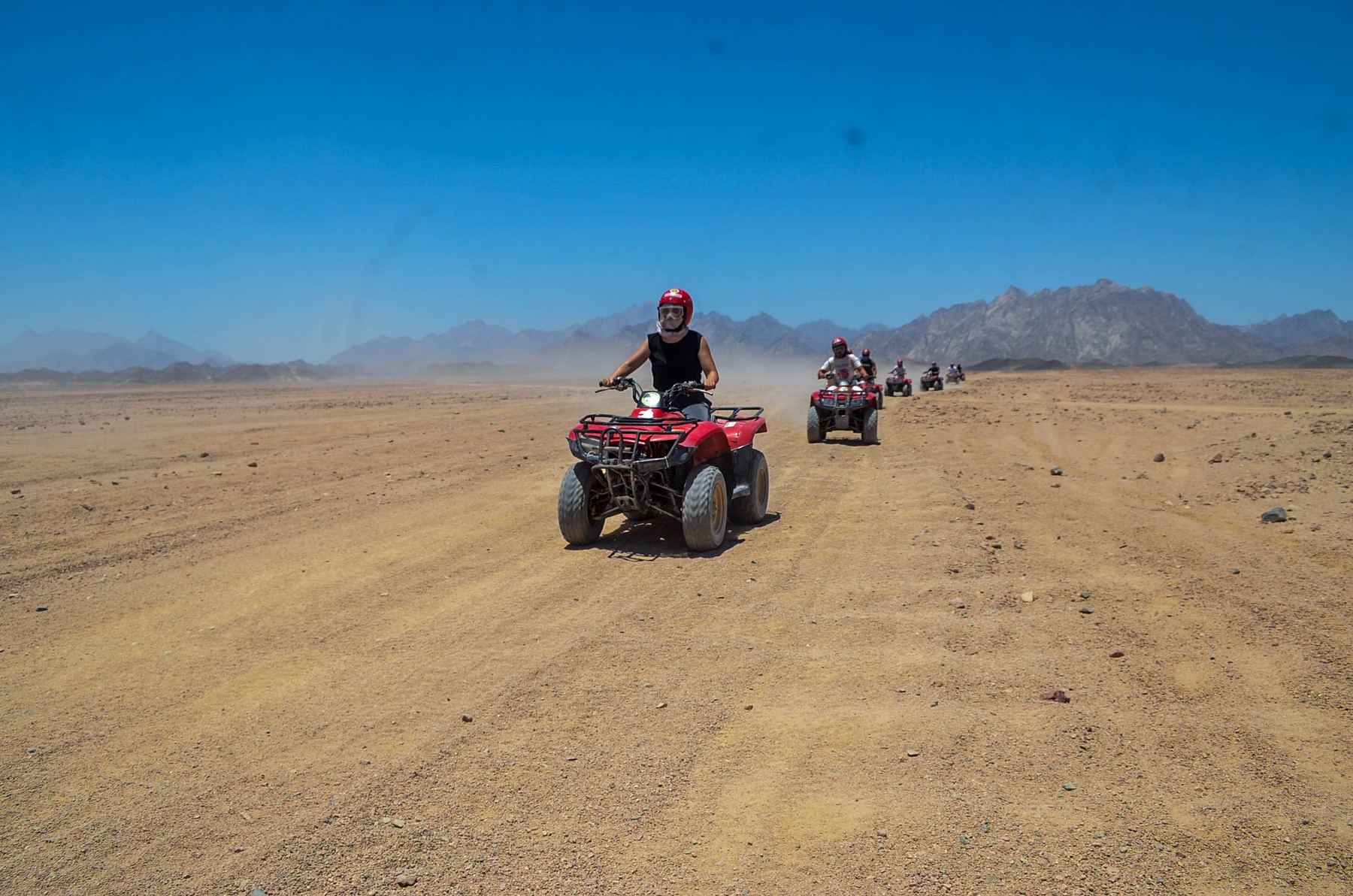
The Red Sea Desert & Mountains: Where the Sea Meets the Sand
Few places on earth put a coral reef and a granite mountain range so close together. On the Red Sea coast of Egypt you can snorkel in the morning and, an hour later, ride a quad into a desert where the peaks reach above 2,000 metres.
The mountains behind Hurghada
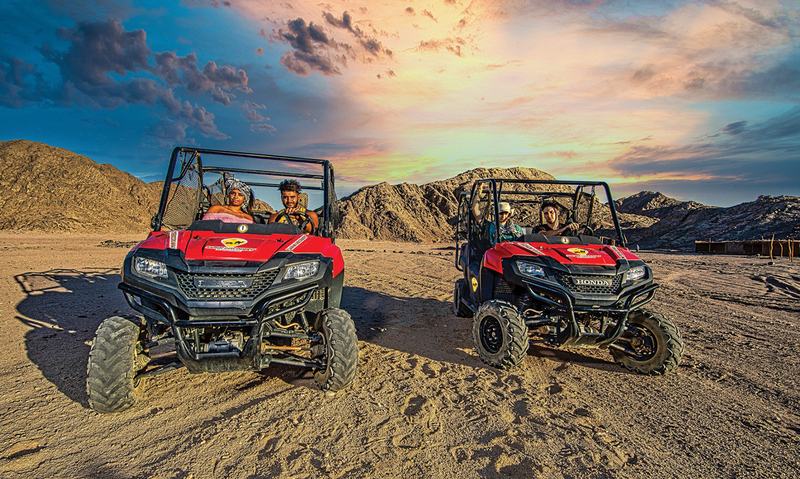
The Red Sea Mountains run parallel to the coast for hundreds of kilometres. Their highest summit, Gebel Shayeb el-Banat, stands west of Hurghada and is the highest point of mainland Egypt. Seen from the safari route in the late afternoon, the range turns copper, pink and finally deep violet.
How the sea shaped the desert
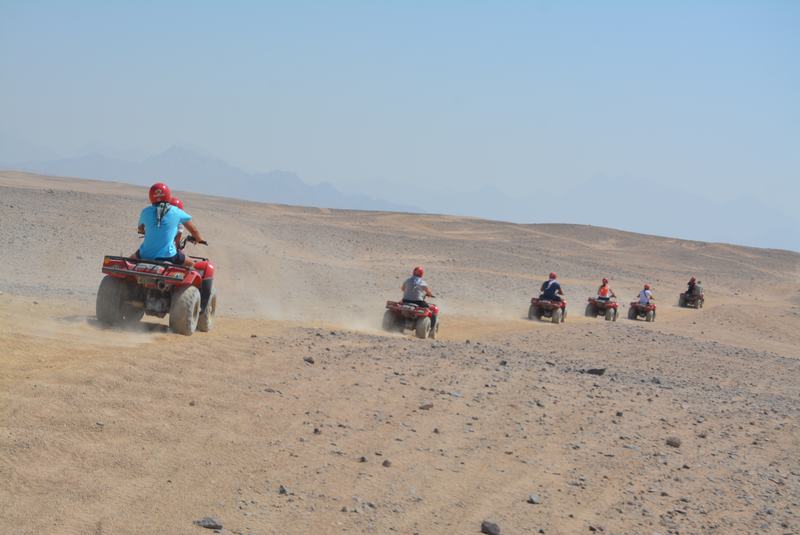
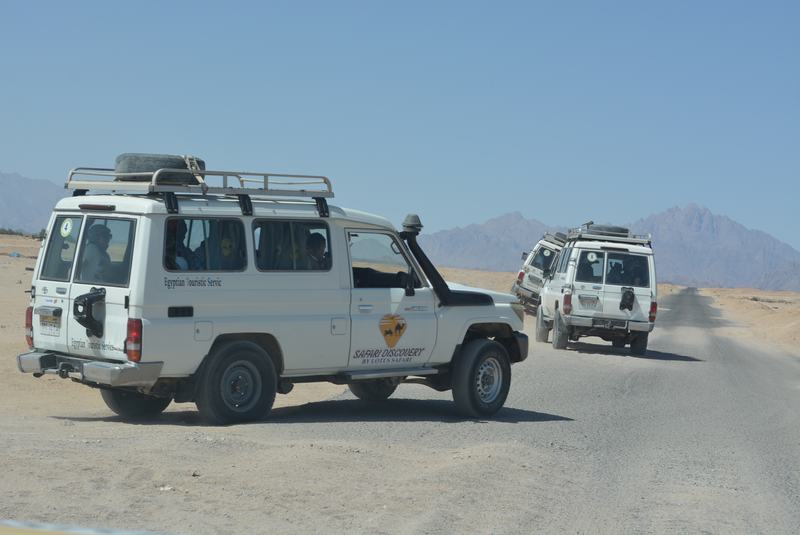
The Red Sea is a young ocean, opened by the slow pulling apart of Africa and Arabia. The same forces lifted the mountains along its edge. Between the mountains and the shore lies a coastal plain of gravel and sand, crossed by wadis that carry flash-flood water — and sediment — down to the sea. It is on this plain that our Fun Safari switches between quad, buggy and jeep.
Sea air meets desert heat
The coast enjoys a steady north wind and mild winters, which is why Hurghada is a year-round destination. A few kilometres inland the air becomes drier and the temperature swings more: warm afternoons and cool, clear nights. In winter bring a light jacket for the evening programmes such as the Jeep Safari with dinner & show.
Wildlife you might spot
- Desert foxes and jackals, mostly active at dusk
- Nubian ibex high in the mountains
- Ravens, wheatears and migrating birds of prey
- Lizards sunning themselves on the rocks
From beach to Bedouin in one afternoon
The beauty of the Red Sea desert is how accessible it is. Hotel pick-up, a 25 km ride to a Bedouin village, sunset over the mountains and back in time for dinner — or stay for the Bedouin barbecue on the Quad 5 Hours. For the bigger picture, read Egypt's Eastern Desert and the official tourism site Experience Egypt.
See the colours for yourself in our photo gallery.